
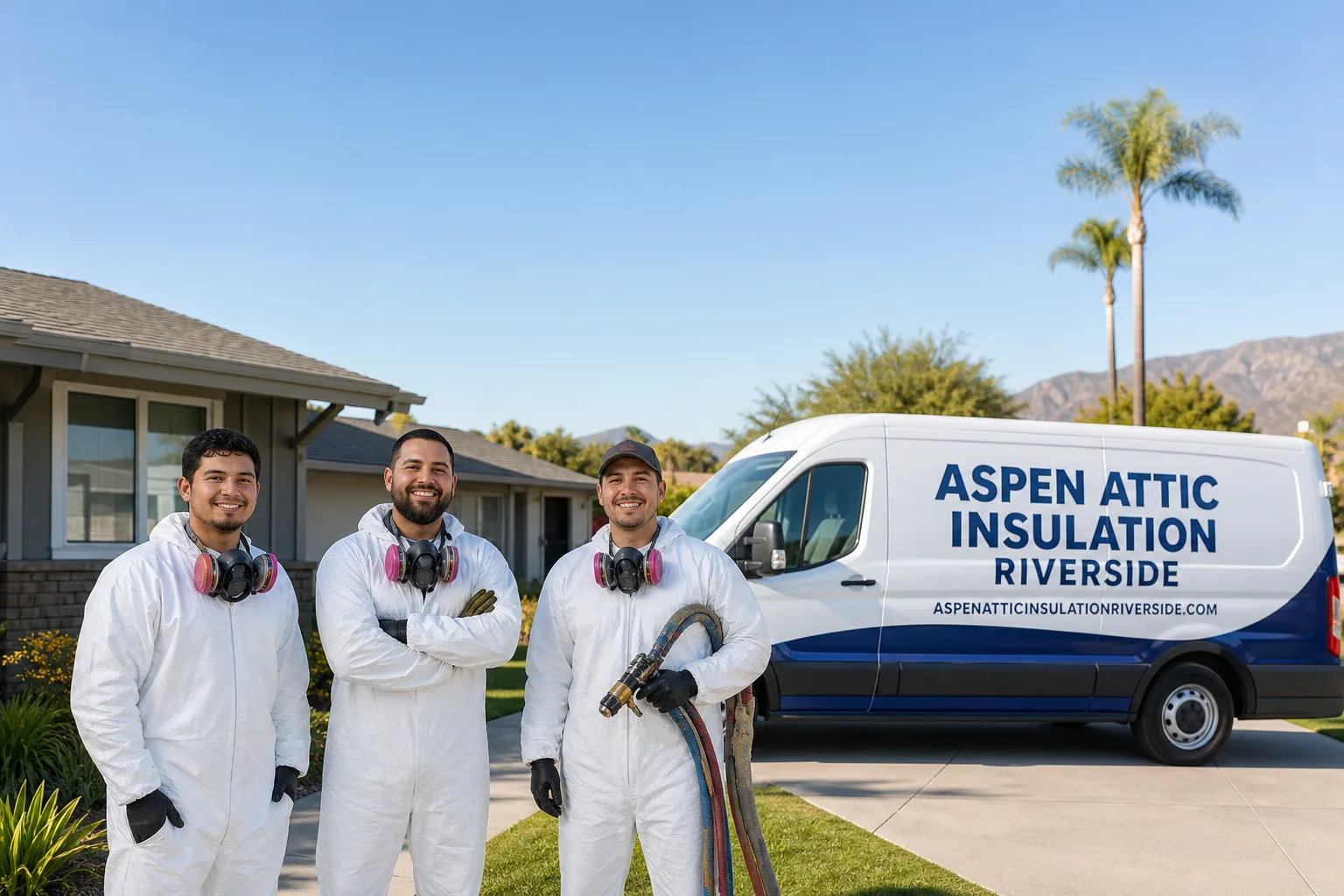
Fast, Reliable Blown In Insulation Across Lakeland Village
Blown-in insulation in Lakeland Village typically runs $1.80 to $3.50 per square foot installed, depending on the existing attic condition and target R-value. Most homes here need R-38 to R-49, which on a 1,200-square-foot attic lands between $2,160 and $4,200. If you call us before 2 p.m. on a weekday, we can usually have a technician at your door the same day. Call (510) 896-3857 and we’ll give you a written price before any work starts.
Lakeland Village sits in a strange spot, thermally speaking. The lake basin traps heat all summer while the surrounding hills cool faster at night, and that swing works attics hard. We know these houses because we’ve been in hundreds of them, from the older streets off Grand Avenue to the newer hillside builds above the lake. You get a tech who knows what a 1970s unvented attic in this specific microclimate does to insulation, not someone seeing it for the first time.
Why Aspen Attic Insulation Riverside Is Lakeland Village’s Preferred Blown In Insulation Company
We built our reputation in the Inland Empire by doing one thing consistently: telling homeowners exactly who’s coming and exactly what they’ll pay, in writing, before the truck rolls. That matters more in Lakeland Village than most places. A lot of our customers here are home alone during the day or have young kids, and opening the door to a stranger is a real concern. So we send the technician’s name and photo before the visit. The person who knocks is the person in the picture, in a clean uniform, with a photo ID badge. That’s the Threshold Standard, and it’s not optional.
Garrett Sloane leads our Riverside team, and he’s particular about how we handle blown-in jobs. Every visit starts with a written price on the table. No estimates that drift, no “we found a problem” phone calls from the attic. The 365-Day Done Right Promise covers labor and materials for a full year, and if something fails we return free and make it right. A live person answers our phones 24/7 at (510) 896-3857, so when you call about your attic at 9 p.m. after a hot day, you talk to a person, not a voicemail tree.
Blown In Insulation Contractors in Lakeland Village
Blown In Insulation Contractors in Lakeland Village work on a specific type of house: single-family detached homes built between 1960 and 1990, most of them wood-framed, most still running their original fiberglass batt. The job involves blowing loose fibers, typically fiberglass or cellulose, into the attic cavity at a controlled density to reach a target R-value, usually R-38 or higher here. You need this when your attic has bare spots, compressed sections, or batts that have settled to half their rated thickness. In Lakeland Village we also see a second trigger: an AC that runs constantly from June through September while the upstairs stays warm.
Retrofit Work in Older Lake-Adjacent Homes
When we retrofit a 1970s home near Grand Avenue or up toward the lake’s north shore, we check for one thing most contractors skip: whether the attic is vented. Many of these older builds aren’t. Blowing cellulose into an unvented attic without addressing airflow is how you get matting, compression, and moisture problems down the road. We’ll spec the job correctly or tell you to hold off until ventilation gets addressed.
New Insulation for Hillside Construction
Custom hillside homes above Lakeland Village have a different problem. Cathedral ceilings, complex rooflines, and missing eave baffles mean blown-in material can block soffit vents. Our techs inspect baffle placement before the blower ever turns on. It’s a small check that prevents condensation and rot later.
Cellulose Insulation in Lakeland Village
Cellulose Insulation in Lakeland Village works well for most 1960s and 1970s homes here, especially where you want better sound control between floors. It’s made from recycled paper treated with fire retardants, and it costs roughly $1.90 to $3.15 per square foot installed in this market. GreenFiber is our standard cellulose line, and we stock enough of it locally to handle most attics in one visit. The catch with cellulose near the lake is moisture: if your attic has condensation issues from the lake’s humidity, cellulose absorbs it faster than fiberglass. We’ll say so plainly if that’s your house, and we’ll recommend Owens Corning fiberglass instead when the attic’s airflow can’t be corrected.
Dense-Pack Applications for Old Walls
Some Lakeland Village homeowners have empty wall cavities in older additions or garage conversions. Dense-pack cellulose at 3.0 to 3.5 lb per cubic foot stops air movement and cuts outside noise from the lake’s weekend boat traffic. It’s not the right product everywhere, but for certain 1980s wood-framed homes, it’s the best option available.
Cellulose vs. Fiberglass for Unvented Attics
We get asked this a lot on streets near the lake. In an unvented attic, we usually push toward fiberglass with a radiant barrier upgrade. Cellulose can work, but the install has to be deeper and fluffier, and the homeowner has to accept more maintenance vigilance. We’ll give you both options and the honest numbers for each.
Trusted Brands We Service in Lakeland Village
We install and service blown-in insulation from Owens Corning, Johns Manville, Knauf, and GreenFiber, and we keep local stock for Lakeland Village jobs so you’re not waiting on a warehouse order. Owens Corning AttiCat is our most requested fiberglass product for the older lake-adjacent homes here. GreenFiber cellulose goes into a lot of the 1980s two-story builds near the lake. We match the material to your attic’s specific moisture and airflow conditions, not to whatever’s already on the truck.
Common Blown In Insulation Problems We See in Lakeland Village Homes
- Settled original batt insulation. The 1960s through 1990s homes here were built with fiberglass batt that compresses over 40-plus years. What started as R-30 is often performing like R-11, leaving hot attic air pouring into living spaces.
- Moisture-matting in unvented attics. The lake raises ambient humidity, and unvented attics trap it. Cellulose blown into these conditions mats down within a few seasons, cutting its R-value roughly in half and creating a home for mold.
- Cathedral ceiling condensation. Hillside homes without proper eave baffles get blown-in material pressed against the roof deck. Condensation forms at the sheathing, and the homeowner sees stains at ceiling corners before they understand what’s happening.
- Shingle deterioration from trapped heat. We see roofs near the lake wearing out early because the attic below them never breathes. Upgrading to a vent-attached radiant barrier alongside blown-in fiberglass drops attic temps by 20 to 30 degrees in August, which buys years of roof life.
Pricing for Blown In Insulation in Lakeland Village, CA
Here’s where pricing actually lands in Lakeland Village as of this year: basic blown-in fiberglass to bring a 1,000 to 1,500-square-foot attic to R-38 runs $2,200 to $4,200. Cellulose to the same spec lands between $1,900 and $3,800. If you’re doing an unvented attic and adding a radiant barrier, that’s another $400 to $900 depending on square footage. Hillside cathedral ceiling work costs more per square foot because access is harder and baffle work adds time. Every number is the written price, on paper, before the blower starts. Call (510) 896-3857 for a free on-site estimate with no post-job surprises.
We Also Serve Cities Near Lakeland Village
Our crews cover the whole Inland Empire footprint from the Riverside-San Bernardino corridor, and Lakeland Village is part of that service area. We also handle blown-in insulation jobs in Riverside, San Bernardino, Corona, and Moreno Valley on a regular rotation. If your project is in any of those cities, our Blown In Insulation specialists can typically schedule you within the same week as a Lakeland Village call.
Serving Lakeland Village, CA - Our Local Coverage Area
We’re based in the Lakeland Village area and know this community well. Use the map below to see our service coverage - if you’re nearby, we can almost certainly help.
FAQs About Blown In Insulation in Lakeland Village
Blown-in insulation in Lakeland Village has to be specified around the lake’s humidity, which hangs in the air year-round and spikes in winter. Fiberglass like Owens Corning AttiCat resists moisture better than cellulose in marginal attics, while cellulose and GreenFiber need dry, well-vented conditions to perform. Pairing the blown-in material with a proper ventilation check and a radiant barrier handles the condensation risk. Call (510) 896-3857 and we’ll inspect your attic’s specific moisture profile before recommending anything.
Yes, but only with the right prep. Unvented attics near the lake trap heat and humidity, so blowing insulation in without addressing airflow creates matting and moisture problems within a few years. We typically add vent-attached radiant barriers or install ridge and soffit vents first, then blow fiberglass to a target R-38 or R-49. Garrett Sloane’s crews have done dozens of these retrofits in Lakeland Village, and we’ll give you the full scope and price in writing before starting.
You’ll notice the upstairs is 8 to 12 degrees warmer than the main floor in summer, your AC runs nearly nonstop on 100-degree days, and rooms near the lake side of the house feel damp or smell musty in winter. In attics we also see baffles blocked by settled batt and dark staining around the roof sheathing, which means condensation is already active. A free on-site check from us will tell you what’s actually up there. Call (510) 896-3857 to schedule it.
Cellulose works in cathedral ceilings only if eave baffles are present and clear, which many Lakeland Village hillside homes lack. Without baffles, blown-in material blocks soffit vents and condensation forms against the roof deck. We check baffle placement as standard procedure before any cathedral ceiling job, and we’ll tell you honestly whether cellulose or fiberglass makes more sense for your specific roofline.
It will significantly reduce heat gain in summer and indoor temperature swings in winter, but condensation prevention requires solving the ventilation problem at the same time. A home near the lake with a sealed attic and no soffit or ridge vents will still trap moisture even with new insulation. That’s why we spec the full system, insulation plus airflow, as one written quote.
Written by Garrett Sloane, Owner at Aspen Attic Insulation Riverside, serving Lakeland Village and the Inland Empire.