
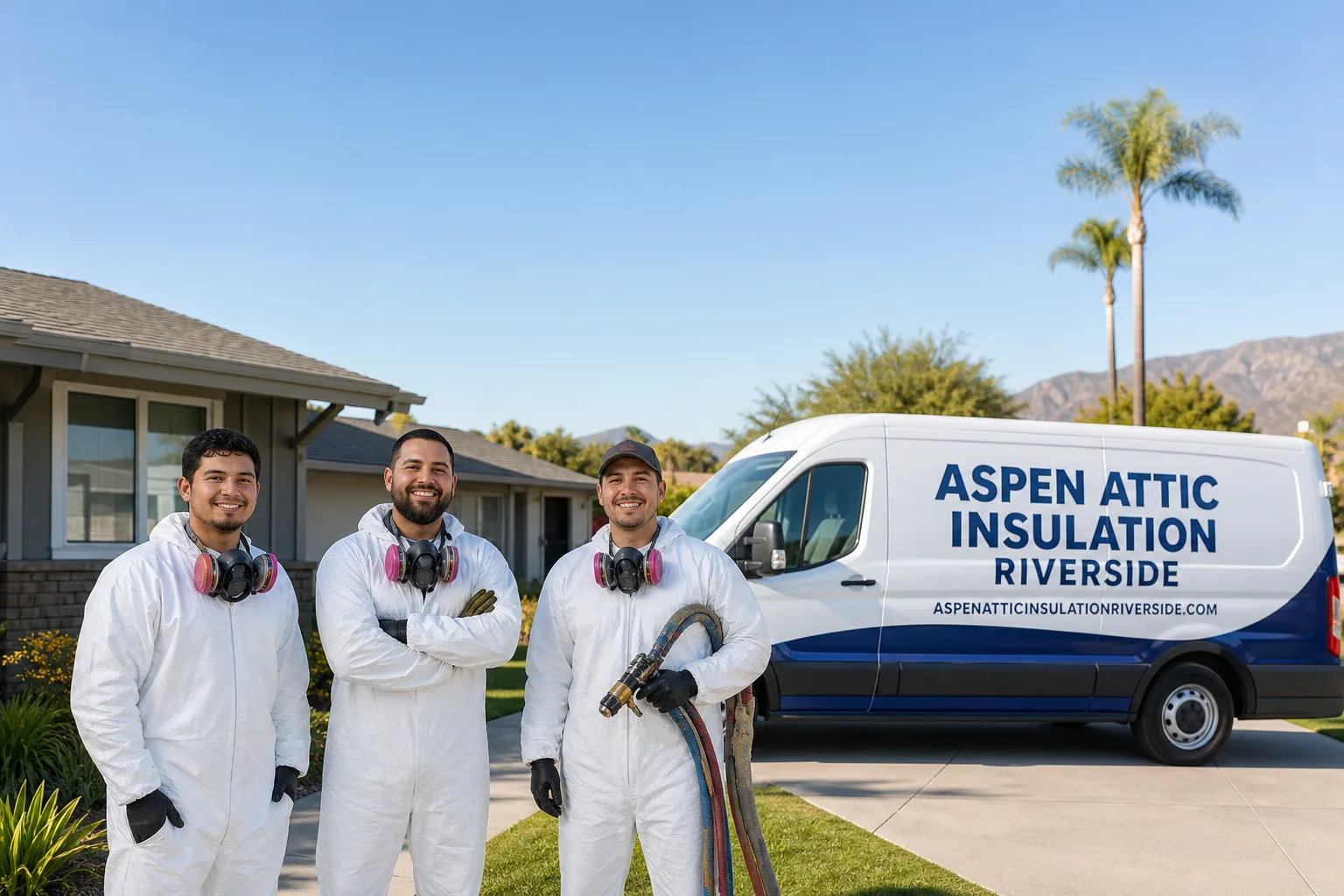
Fast, Reliable Spray Foam Insulation Across Highland
Spray foam insulation in Highland typically costs $2,800 – $6,400 for a full attic retrofit and $3,900 – $7,800 for wall cavity injection in an average 1,200 – 1,800 sq ft ranch home. Most jobs are completed in one day, and we answer the phone live at (510) 896-3857 when you call. Highland’s older housing stock, especially in East Highlands, means most homes need air sealing just as much as insulation, and closed-cell foam does both in a single pass. If your 1950s – 80s home still has the original rock wool or settled fiberglass in the attic, you’re losing money every month the temperature swings.
We know Highland’s streets, its 92346 zip codes, and the specific failure patterns in its ranch homes and hillside properties. Our crews serve Highland locally, dispatched from the Inland Empire office, so we’re on-site without the long windows you get from L.A.-based outfits.
Why Aspen Attic Insulation Riverside Is Highland’s Preferred Spray Foam Insulation Company
Highland homeowners call us because we show up the way we say we will. Before any technician arrives, you get their name and photo by text or email. They wear a marked uniform and a photo ID badge at the door. If someone else shows up claiming to be us, the visit is free and we make it right. That’s the Threshold Standard, and it applies to every job we run in Highland.
Our Spray Foam Insulation team works on Highland’s 1950s through 1980s single-story homes every week. We know what these attics look like: compacted rock wool, skipped bays, no air sealing around top plates. We’ve opened enough East Highlands attic hatches to know exactly what’s waiting. Homeowners in Highland consistently tell us two things after the job: upstairs rooms finally match the thermostat, and nobody knocked on the door they didn’t expect.
Garrett Sloane runs our operation with a simple rule: the price you’re quoted is the price you pay. No change orders halfway through. No “we found something” upcharges. Every Highland job gets a written price before work starts, and it’s covered by our 365-Day Done Right Promise for labor and materials. If the repair fails, we come back free. That’s it, in writing.
Spray Foam Attic Insulation in Highland
Spray Foam Attic Insulation is the single highest-impact upgrade for Highland homes built before 1990, and it solves the problem that’s costing you the most: attic heat radiating through ceilings during 100°F summers. In a typical Highland ranch, the attic is unconditioned, vented, and sits directly on top of your living space. When outdoor temperatures hit triple digits, that attic cavity can reach 140°F, and all that heat presses down through whatever insulation is left.
What we do in a Highland attic job: remove and dispose of the old compressed fiberglass or rock wool, air-seal every penetration (top plates, wire chases, recessed can lights, flues), then apply the spray foam. Closed-cell foam goes around the perimeter and air-seal points first, then open-cell fills the field of the ceiling deck. For homes with original rock wool that has compacted to roughly R-11, this retrofit brings the attic up to R-38 or better, which is what today’s California energy code requires.
What a Highland Attic Retrofit Includes
Full removal of old insulation is part of the job, not an add-on. You can’t spray foam over compacted rock wool and expect it to perform. The old material comes out, the attic gets a once-over for rodent damage or roof leaks, and only then do we seal and spray. That’s the only way the foam bonds properly to the ceiling deck.
Attic Retrofit Pricing in Highland
A standard 1,000 – 1,400 sq ft Highland attic runs $2,800 – $4,200 for open-cell foam to R-38 including old insulation removal. Closed-cell jobs run $4,100 – $6,400 for the same footprint. The price difference comes down to the R-value per inch and the vapor-permeability profile. We’ll tell you which one fits your house and your budget, in writing, before any work starts.
Spray Foam Wall Insulation in Highland
Spray Foam Wall Insulation targets the second-biggest thermal leak in Highland homes: uninsulated or poorly insulated wall cavities in ranch and hillside houses from the 1950s through 1980s. When those walls were built, code didn’t require the levels that apply today, and many Highland homes have empty 2×4 cavities between the drywall and the exterior stucco or siding. Hot outside air pushes through cracks around outlets, windows, and baseboards all summer, and your AC runs nonstop fighting it.
We install wall foam from the exterior when possible, drilling small access holes through stucco or siding at each stud bay, then injecting closed-cell foam that expands into the cavity and air-seals the wall assembly. For interior-only access jobs, we work through drywall and patch cleanly afterward. Most Highland wall retrofits take one day, and you’ll feel the difference in rooms with west-facing walls within 24 hours.
Where Wall Foam Matters Most in Highland
West-facing walls absorb the full afternoon sun, and on a 104°F day, the exterior surface can hit 150°F. If the wall cavity is empty, that heat conducts straight through studs and radiates into the room. Closed-cell foam at 3.5 inches in a 2×4 wall gives you R-20-plus plus a vapor barrier, which matters when overnight temperatures drop near freezing in winter and warm, moist indoor air tries to escape through the wall assembly.
Wall Retrofit Pricing in Highland
Exterior-injection wall foam for a typical 1,200 – 1,600 sq ft ranch runs $3,900 – $7,800 depending on access, siding type, and how many walls are done. We price it flat per square foot of wall surface, so you know the number before we start. Free estimates always, and the written price is fixed.
Trusted Brands We Service in Highland
We stock and install spray foam from Owens Corning, Johns Manville, and Icynene, plus air-sealing materials from Knauf and Demilec. Having multiple brands on hand matters in Highland because older homes need different foam profiles depending on the assembly: a 1960s East Highlands attic with open framing and vented eaves takes open-cell fine, while a 1980s hillside home with low-slope roof decking needs closed-cell for the vapor impermeability. We match the product to the house, not the other way around. No one-size-fits-all foam.
Common Spray Foam Insulation Problems We See in Highland Homes
- Settled or missing attic insulation in 1950s – 80s homes. Upstairs rooms run 10 – 15°F hotter than the rest of the house in summer. Blown-in or batts have compacted, and the attic is acting as a radiant ceiling heater.
- Uninsulated wall cavities in older ranch homes. Outside air infiltrates through outlet boxes, window frames, and baseboard gaps. Your AC runs constantly and you still can’t hold a setpoint on hot afternoons.
- Compacted rock wool in East Highlands attics. Original rock wool loses its air-trapping ability after 40 – 60 years, leaving effective values around R-11. The attic becomes a heat sink that pumps warmth back into living spaces long after the sun drops behind the San Bernardino Mountains.
- Air-seal failures at top plates and penetrations. Even newer insulation underperforms when warm air rises through wall top plates, wire chases, and can-light housings. Sealing those first is the difference between a real fix and a Band-Aid.
Pricing for Spray Foam Insulation in Highland, CA
Here’s what we actually charge in Highland, so you can plan before you call. Attic foam retrofit including old insulation removal: $2,800 – $6,400. Wall cavity injection foam: $3,900 – $7,800. Rim joist sealing at the foundation line: $900 – $1,800 for a typical ranch perimeter. Garage ceiling foam (attached garage under living space): $1,200 – $2,400. Roof deck foam for vaulted or cathedral ceilings: $3,400 – $5,900. The biggest cost drivers are square footage, access difficulty (tight hillside lots, low-clearance attics), and whether old material needs full removal. You’ll get your exact number in writing before anything starts. Call (510) 896-3857 for a free estimate.
We Also Serve Cities Near Highland
Our crews work throughout the Highland area and into Highland proper, plus the surrounding communities of San Bernardino, Loma Linda, Mentone, and Lake Arrowhead. If you’re in one of these spots and dealing with the same older housing stock, same climate swings, and same settled insulation, the same team and pricing applies.
Serving Highland, CA - Our Local Coverage Area
We’re based in the Highland area and know this community well. Use the map below to see our service coverage - if you’re nearby, we can almost certainly help.
FAQs About Spray Foam Insulation in Highland
Yes, but only after the old rock wool comes out. You cannot spray foam over compacted rock wool and get the R-value or air-seal you’re paying for. We remove the old material completely, inspect the ceiling deck, air-seal the penetrations, then spray to R-38 or better. In an East Highlands ranch we worked on, the rock wool had settled below the joist tops entirely, and the homeowner saw bedrooms cool down the same week we finished. Call (510) 896-3857 if you suspect you’ve got the original stuff up there.
Yes, and that’s exactly the scenario closed-cell foam is built for. Highland regularly swings 40°F or more between afternoon highs over 100°F and overnight lows near freezing. Closed-cell foam’s higher R-value per inch plus its air-sealing and vapor-managing properties buffer the interior against both the heat load and the nighttime temperature drop, so your HVAC doesn’t have to fight a moving target every day.
If your home was built between the 1950s and 1980s and the attic still has granular, brownish-gray, pebble-like material that looks nothing like pink or yellow fiberglass batts, that’s rock wool, and it’s almost certainly below the R-38 code minimum now. Pop your head through the attic hatch with a flashlight. If you can see the ceiling joists poking above the material, it’s compacted to the point of failure. We’ll confirm the exact condition during a free estimate.
Yes. We typically drill small exterior access holes through stucco or siding at each stud bay, inject closed-cell foam, then patch to match. Interior-only access is possible too, working through drywall with clean patching afterward. Most 2×4 wall retrofits in Highland take one day, and the air-sealing benefit alone usually makes the difference on west-facing rooms.
Yes, when installed correctly and protected by the required thermal barrier. Closed-cell and open-cell foams are both used in wildfire-interface zones. The foam goes inside the building envelope – attic ceiling deck or wall cavities – not left exposed to flame sources. We follow current California building and ignition-resistance requirements for the assembly, and we’ll explain what we’re installing and why before any material goes in.
If you’re ready to see what a real air-seal and R-38 retrofit does for your Highland utility bills, call us at (510) 896-3857. A live person answers, we’ll schedule the estimate, and you’ll know the exact price before anyone climbs into your attic.
Written by Garrett Sloane, Owner at Aspen Attic Insulation Riverside, serving Highland and the surrounding Inland Empire communities.