
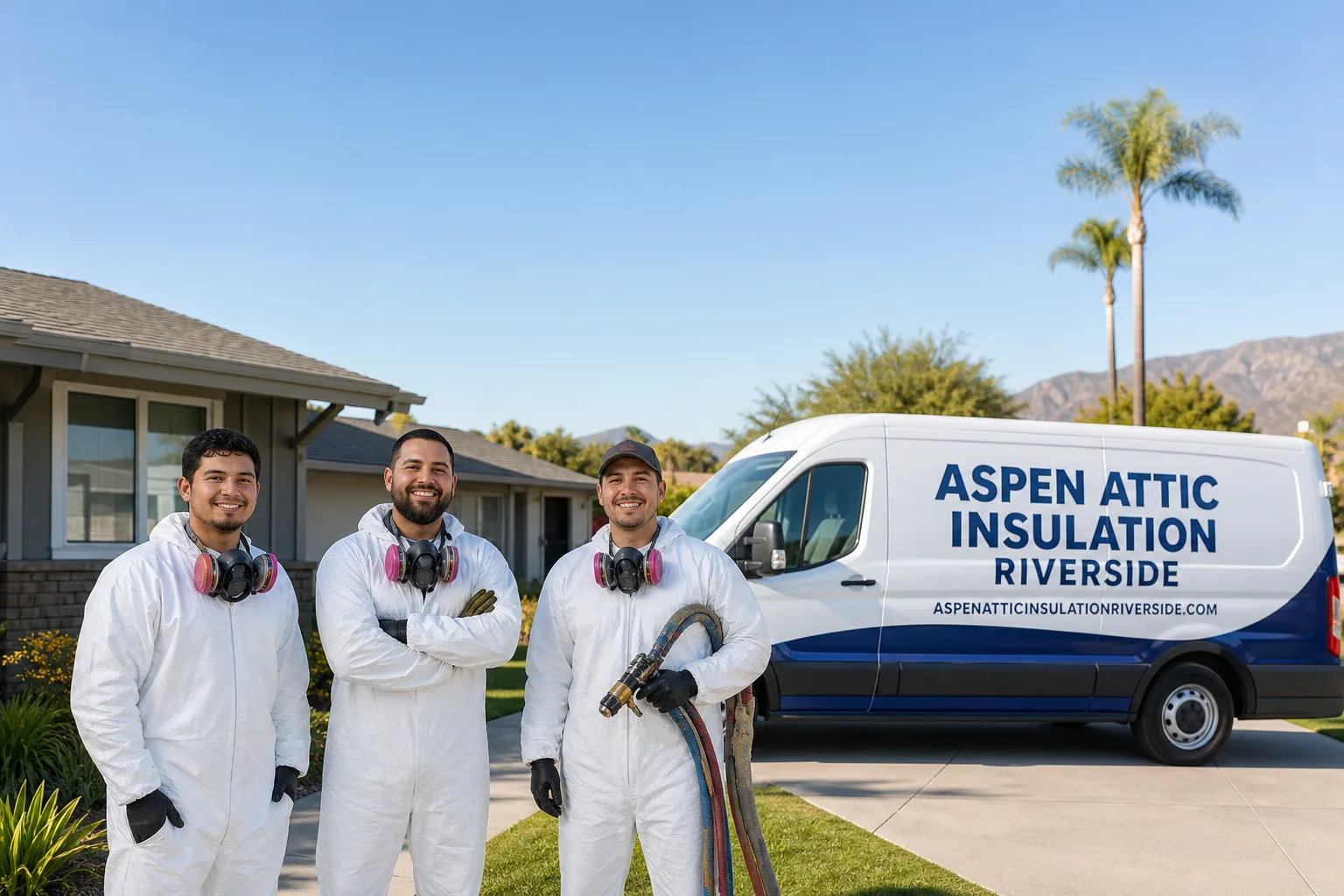
Fast, Reliable Attic Insulation Across Corona
Attic insulation in Corona is a cooling problem first, heating problem second. Our crews work in Corona neighborhoods from the 91 corridor down to the older tracts near Dos Lagos every week, and we know exactly what a 140°F attic does to your AC bill. When you call (510) 896-3857, a live person answers, and you’ll get a written price before any work begins, with a technician’s name and photo sent to you before they arrive. No strangers at your door. No surprise charges at the end.
Most Corona homes we inspect have R-19 fiberglass batts or less, far below what the heat demands. We replace that with insulation matched to your home’s actual needs, using materials from Owens Corning, Johns Manville, and GreenFiber depending on the job. If you want someone who treats your home like their own and gives you the price in writing up front, call (510) 896-3857.
Why Aspen Attic Insulation Riverside Is Corona’s Preferred Attic Insulation Company
We’ve been doing Attic Insulation work long enough to know that homeowners in Corona want two things: proof of who’s coming, and a price that won’t change. That’s why every technician we send is background-checked, identity-verified, and arrives in a clean marked uniform with a photo ID badge. You get the tech’s name and photo before the visit. If anyone else shows up, that visit is free and we make it right. That’s the Threshold Standard, and it applies to every job we do in Corona.
Homeowners here call us because their upstairs bedrooms hit 85°F by midafternoon in July and their AC runs nonstop. We’ve fixed that in hundreds of Corona homes, from newer subdivisions east of the 15 to the established neighborhoods along Main Street. Our crews are dispatched from the Inland Empire office, which means a Corona call gets a Corona-area crew, usually within a day or two for scheduled work, same day for emergencies when we have availability.
Every job carries our 365-Day Done Right Promise in writing, covering labor and materials for a full year. If a repair fails, we come back free. That’s not a sales line. It’s the contract.
Attic Ventilation in Corona
Attic Ventilation in Corona is the difference between an attic that stays under 120°F and one that bakes at 140°F all summer. Proper ventilation moves hot air out through ridge or gable vents and pulls cooler air in through soffit vents, which reduces the temperature load on your insulation and your ducts. In Corona’s dry heat, homes with poor ventilation see shingle curl, warped decking, and AC systems that run 40 to 60 minutes longer per cycle than they should. Installing or repairing attic ventilation in Corona typically costs $350 to $1,200 depending on vent type, attic size, and whether existing soffit vents are blocked or missing.
Soffit and Ridge Vent Repair
Many 1980s and 1990s Corona tract homes have soffit vents that original builders covered with insulation or never cut open properly. We clear those, add baffles to keep airflow channels open, and verify ridge vent coverage. A soffit and ridge vent repair on a typical Corona single-story runs $400 to $800.
Powered Attic Ventilators
When a Corona attic hits 130°F by noon, passive ventilation may not be enough. We install solar or electric powered ventilators that actively pull hot air out. Powered vent installation with thermostat control runs $800 to $1,400 in most Corona homes, and we walk you through whether it’s the right move for your specific roof orientation and attic volume.
Radiant Barrier in Corona
Radiant Barrier in a Corona attic works by reflecting radiant heat away from the living space, which matters in a climate where the sun beats on your roof from May through October. A radiant barrier stapled to the underside of the rafters can lower attic temperatures by 20°F to 30°F on a hot July afternoon, which directly lowers the temperature of any ducts running through that space. Installing radiant barrier in Corona typically costs $1.50 to $3.00 per square foot, so a 1,500-square-foot attic runs roughly $2,250 to $4,500 depending on roof pitch, accessibility, and existing insulation condition.
Radiant Barrier with Blown-In Insulation
The most effective Corona retrofit combines a radiant barrier on the rafters with fresh blown-in insulation on the attic floor. That pairing addresses both radiant heat gain and conductive heat transfer. Combined costs in Corona generally run $3,500 to $6,500 for an average single-family home, and we recommend it for homes where upstairs comfort is the main complaint.
Which Attics Benefit Most
Homes with HVAC ducts running through the attic benefit most, because a radiant barrier reduces the air temperature around those ducts. Tile roof homes in Corona’s newer developments also see large gains, since tile stores heat and radiates it downward for hours after sunset. We’ll tell you plainly if your attic won’t benefit enough to justify the cost.
Trusted Brands We Service in Corona
We stock and install materials from Owens Corning, Johns Manville, and GreenFiber, matched to the specific job rather than whatever is left on the truck. For Corona homes with settled batts and air-sealing needs, we often use Owens Corning fiberglass or GreenFiber cellulose blown to R-38. For attics needing batt replacement, Johns Manville R-30 or R-38 batts go in. Because we carry these brands locally, Corona customers don’t wait on special orders, and we can start most insulation jobs within a few days of the quote.
Common Attic Insulation Problems We See in Corona Homes
- Settled R-19 batts below 8 inches. Original fiberglass batts in 1980s – 2000s tract homes compress over decades, dropping effective R-value to R-11 or lower in some bays. The result is a heat sink over bedrooms and hallways, with upstairs rooms running 8°F to 12°F warmer than downstairs.
- Ducts in unconditioned attics leaking cooled air. Foil-faced duct insulation from the build date degrades, and duct joints separate. In a 130°F attic, cooled air leaking from a 2-inch gap adds real load to the AC compressor, shortens its life, and creates cold spots in rooms farthest from the thermostat.
- Exposed attic hatches and can lights. Corona homes with pull-down stairs or recessed lights in top-floor ceilings lose conditioned air through gaps that were never sealed. We air-seal hatches, add insulation dams around can lights, and caulk top plates before adding new insulation.
- Shingle curl from trapped heat. Poor attic ventilation in Corona’s Santa Ana wind conditions accelerates shingle aging and can void roof warranties. A properly vented attic protects both your insulation investment and your roof’s lifespan.
Pricing for Attic Insulation in Corona, CA
Blown-in insulation to bring a Corona attic from R-19 to R-38 typically runs $1,800 to $3,400 for an average 1,200 to 1,800 square foot single-story home, including air sealing of top plates and can light dams. Full batt replacement runs $2,500 to $4,500. An insulation top-up over existing batts runs $1,200 to $2,200. Radiant barrier adds $1.50 to $3.00 per square foot. The biggest cost drivers are attic accessibility, existing insulation condition, and whether air sealing is needed (it usually is in Corona’s older homes). Every quote is written, itemized, and fixed before work starts. Call (510) 896-3857 for a free estimate and we’ll give you exact numbers for your attic.
We Also Serve Cities Near Corona
Our Attic Insulation in Corona teams also cover Norco, Chino, Mira Loma, and Riverside. If you’re in one of those areas and dealing with the same inland heat and aging attics, call (510) 896-3857 and we’ll get you scheduled with a Corona-area crew.
Serving Corona, CA - Our Local Coverage Area
We’re based in the Corona area and know this community well. Use the map below to see our service coverage - if you’re nearby, we can almost certainly help.
FAQs About Attic Insulation in Corona
In Corona, your attic reaches 130°F to 140°F on summer afternoons, and that heat pushes down into your living space through the ceiling. Upgrading insulation slows that heat transfer, which directly reduces how hard your AC runs. Heating matters far less here because winter temperatures are mild, so the return on insulation investment in Corona comes almost entirely from cooling savings.
If your existing batts are dry, free of rodent damage, and reasonably evenly distributed, topping up with blown-in insulation is cost-effective and often sufficient. But if the batts have settled below 8 inches, are compressed, or show signs of moisture or pest activity, replacement gives a cleaner result and allows us to air-seal the attic floor first. We’ll tell you which applies after a 20-minute attic inspection. Call (510) 896-3857 to schedule one.
Yes, radiant barriers work well in Corona’s climate because our heat is primarily radiant, not conductive. They reduce attic temperatures by 20°F to 30°F on hot days, which extends the life of ductwork and lowers AC load. They’re worth the cost in attics with ducts present, homes with tile roofs that hold heat into the evening, and any upstairs that stays hot after the sun goes down.
Cold spots upstairs usually mean either settled insulation creating gaps over those rooms, or leaky ducts in the attic losing cooled air before it reaches the registers. If some rooms are consistently 8°F to 10°F warmer than others on the same floor, have us inspect the attic. We’ll identify the cause and give you a written price to fix it. Estimates are free; call (510) 896-3857.
The Department of Energy recommends R-38 for attics in Corona’s climate zone, while coastal cities can often get by with R-30. Our hotter, drier summers justify the higher level. Many older Corona homes sit at R-19 or less, so bringing them to R-38 typically cuts cooling costs by 15% to 25% and makes upstairs rooms noticeably more comfortable.
If you’re tired of upstairs bedrooms baking by 4 p.m. and want a written price with a named, photo-badged technician before anyone steps foot in your home, call Aspen Attic Insulation Riverside at (510) 896-3857. Our crew recently worked in a 1990s tract home near Corona’s Dos Lagos area where the R-19 fiberglass batts had settled to under R-11 in some bays. We air-sealed the top plates, blew in GreenFiber cellulose to R-38, and installed a radiant barrier on the rafters. The homeowner’s July AC bill dropped nearly 30%, and the upstairs stopped baking by 4 p.m. That’s the kind of result we deliver in Corona, with the price in writing before we start and a 365-day guarantee backing every bag of insulation we blow in.
Written by Garrett Sloane, Owner at Aspen Attic Insulation Riverside, serving Corona, CA.